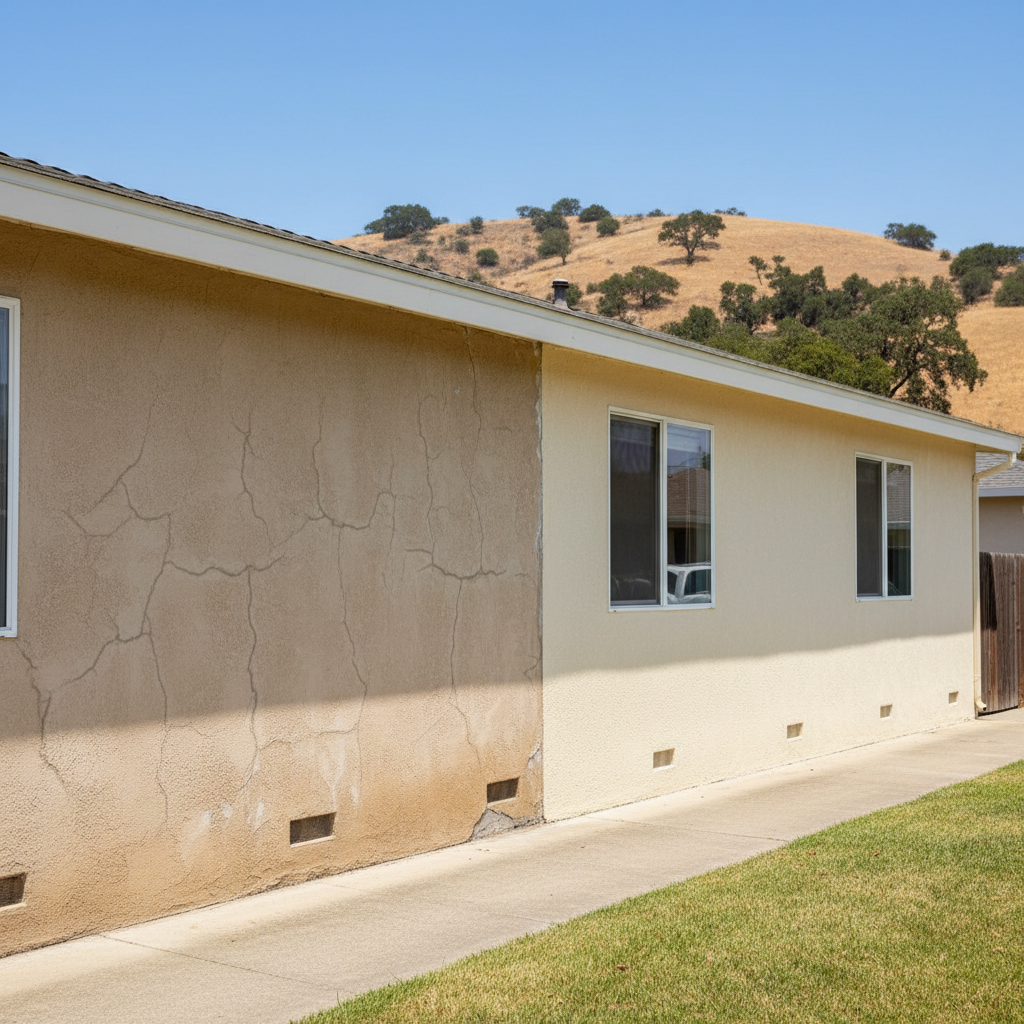
Alright, let's talk about EIFS. If you're looking into this for your home here in Antioch, you've probably heard a few terms tossed around, and honestly, it can get confusing pretty fast. The big decision you'll face is between what we call a 'barrier' EIFS system and a 'drainage' (sometimes called 'water-managed') EIFS system. They might sound similar, but trust me, they're built differently and perform differently, especially with our local weather.
So, What's the Deal with Barrier EIFS?
A barrier EIFS system is exactly what it sounds like: it's designed to be a complete block against water. Think of it like a really good raincoat for your house. The whole idea is that the exterior finish, which is usually a synthetic stucco, should keep every single drop of water out. There's no path for water to get behind it, and if it somehow does, well, there's no way for it to get out either.
Historically, barrier systems were the first type of EIFS to really catch on. They're often a bit cheaper to install upfront because their construction is simpler. You've got your insulation board, then a base coat with mesh, and finally your finish coat. That's pretty much it. When they're put in perfectly and stay perfectly sealed, they work great.
The Lowdown on Drainage EIFS
Now, drainage EIFS is a whole different beast. This system understands a simple truth: no exterior wall is ever going to be 100% perfect at keeping water out, 100% of the time, forever. Water always finds a way, doesn't it? So, instead of just trying to stop it, a drainage system is built to manage it.
Here's how it works: it still has the insulation board, the base coat, and the finish coat, just like a barrier system. But behind all that, there's a drainage plane and a way for any water that sneaks past the exterior finish to escape. This usually means a moisture barrier (like house wrap), a small air gap or drainage mat behind the insulation, and weep holes or a drainage track at the bottom of the wall. This setup lets gravity do its job, pulling any trapped water down and out.
Cost: What You'll Pay
Let's be real, cost is always a factor. Barrier EIFS is generally less expensive to install initially. You're looking at fewer materials and a slightly simpler installation process. Drainage EIFS, with its extra layers and components for water management, will cost you more upfront. We're talking maybe 15-25% more, depending on your home's design complexity and the specific products we use.
However — and this is a really big "however" — that initial saving on a barrier system can vanish quickly if you run into moisture problems down the line. Repairs for water damage behind a barrier system can be extensive and expensive, often meaning we have to remove sections of the EIFS to fix the hidden issues.
Durability and Maintenance
Both systems are durable when it comes to resisting impacts and providing good insulation. The main difference in durability really comes down to water. A barrier system's durability depends entirely on its seals staying intact. If a window flashing fails, or a crack develops, water can get in and just sit there, leading to rot, mold, and structural damage over time. You might not even know it's happening until it's a huge problem.
Drainage EIFS, on the other hand, is much more forgiving. If a little water gets in, the system is designed to let it out. This significantly reduces the risk of long-term moisture damage to your home's sheathing and framing. Maintenance for both involves keeping the surface clean and quickly repairing any cracks or damage. But with a drainage system, you get that extra layer of protection, which is pretty nice.
Appearance: Will Anyone Know the Difference?
From the street, you won't be able to tell the difference between a barrier and a drainage EIFS system. The finish coat is the same. Both offer that smooth, modern look, or can be textured to mimic traditional stucco. So, if you're worried about aesthetics, don't be. Both systems will give your home that clean, insulated exterior you're looking for.
My Recommendation for Antioch Homeowners
Look, I've been doing this for a long time, and I've seen what happens when systems fail. Here in Antioch, especially with our hot summers and occasional heavy winter rains, managing moisture is absolutely critical. We've got homes in areas like the Dallas Ranch neighborhood that see a lot of sun exposure, which can really bake and stress exterior finishes over time. Plus, we're not immune to those sudden downpours that can really test a building envelope.
My honest-to-goodness recommendation for homeowners in Antioch is always to go with a drainage EIFS system. Yes, it costs a bit more upfront, but that investment pays off big time in peace of mind and protection against future water damage. It's simply a more robust, forgiving, and ultimately safer system for your home.
At Antioch Stucco & Plastering, we believe in building things right the first time. We'll always guide you toward solutions that offer the best long-term value and protection for your property. Don't cheap out on something that's going to protect your biggest investment — a drainage system is just smart building practice.